

my lesbian passport
how queerness makes me feel proud in a way being british just doesn't

In Gary’s Irish pub in Vang Vieng, Laos, my passionately Irish girlfriend was grinning ear to ear and honestly, I was overjoyed for her – I love seeing her in her element and I’ll happily pay Western food prices for the privilege. There was also a bittersweet reminder that I could never cry tears of joy in a British pub the same way. I mean, why would I want to? I learnt from a relatively young age that being British, particularly English, is low-key embarrassing: our history is arrogant to say the least and we don’t prove to be much better in the present.
When we travel, we ask “do you speak English?” without thinking twice while non-native English speakers do the labour of translating. British tourists have a notoriously bad reputation and when I see the gaggles of shirtless backpackers walking around Thailand like they own the place, and that one drunk guy in Pai’s 7/11 literally mocking the cashier’s accent, it’s easy to see why everyone hates us. The only time I believed being British could be a potentially charming quality was when I used to frequent the USA. I didn’t feel that urge to apologise for my nationality, and that’s because American culture is often viewed through the same lens.
Identity can feel wildly different depending on where you go and who you meet, abroad and even within the UK. I studied in Wales for university and even though English people were everywhere, I was still acutely aware of my differences to the locals. In my mind, my English background was a negative.
I was looking at the pictures that covered Gary’s Irish pub, listening to joyful music and watching lovely exchanges between people from nearby counties. “I’m from Essex” I had to admit regretfully. People are often far too nice to me when I say that, picking up on my embarrassment and pretending Essex is equally interesting out of kindness. It hit me though, as Gary queued a Picture This song because Mairéad was wearing the band t-shirt, that although I’ll never feel at home in a British pub (I’ll just be happy to see Yorkshire puddings on a menu, at best), I could relate to the feeling of walking into a space and feeling relieved and gleeful. I don’t find it amongst Brits, but I do find it amongst queer people. I’d uploaded a close friends Instagram story in Bangkok earlier on in my trip, drunk and surrounded by drag queens:
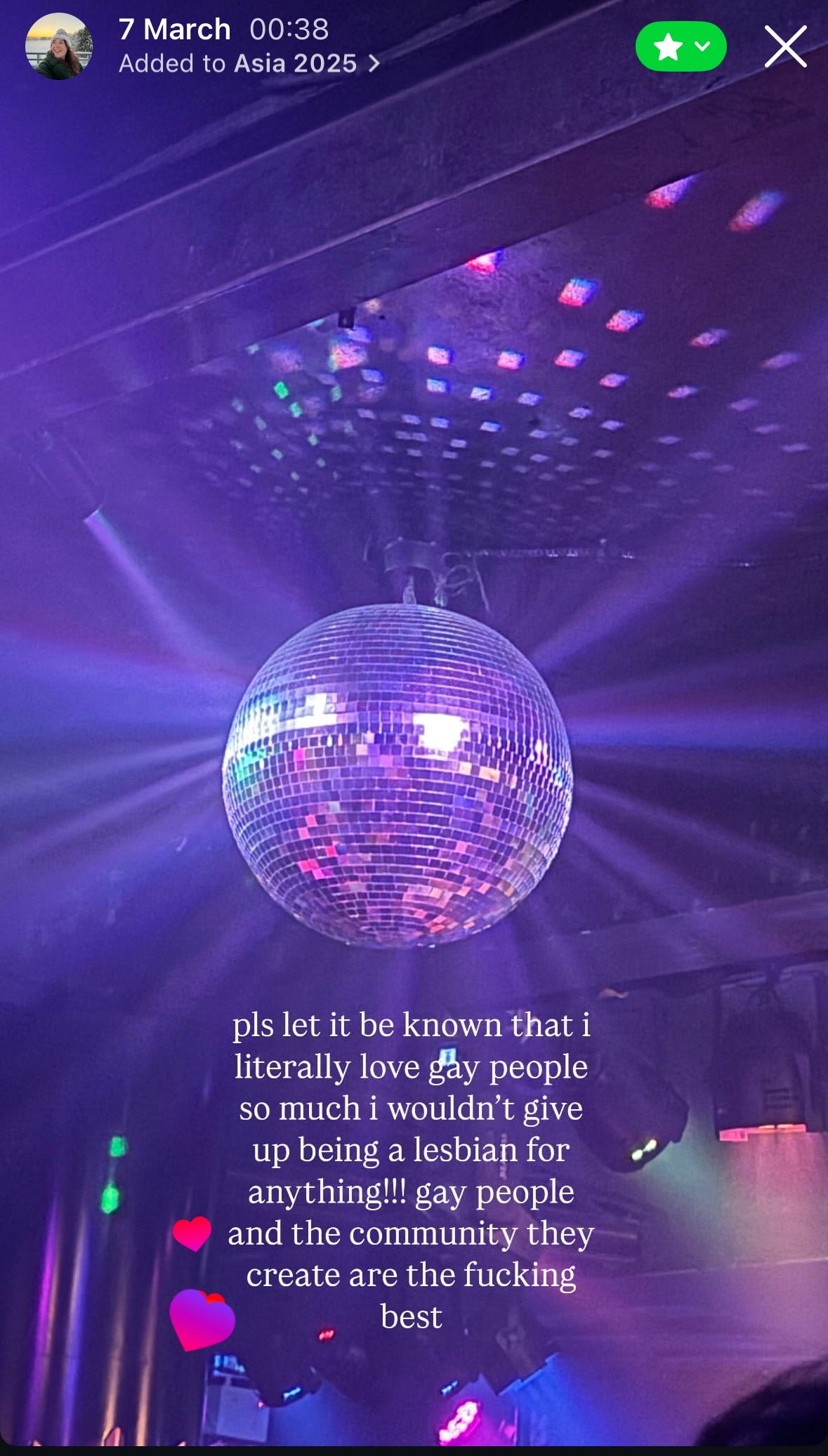
Singing Defying Gravity at the top of my lungs and kissing my girlfriend without any reservations, I was overwhelmed by gratitude that I could fly to the other side of the world and find my community through spotting rainbows. To be honest, Thailand in general made me so thrilled to be gay – even as we were going through security at Bangkok’s airport there were colourful “LGBTQ2S+” stickers plastered on walls, as if we’re not just tolerated, but celebrated. It was an acceptance beyond a legal passport stamp – a genuinely warm welcome to our Sapphic identities.
Queer connections are found in far less accepting areas as well. Sometimes, it’s not a whole bar full of people singing Good Luck, Babe, but it’s spotting somebody’s Pride pin or bracelet and sharing a moment of knowing. There’s the “I think they’re gay” moments – Mairéad and I whispering to each other as we pass what appears to be a butch/femme duo holding hands on a hike up to a temple. For as long as I can remember, I’ve been seeking signs that scream You Are Not Alone, and that doesn’t stop even though I’m now 27 and can list more queer friends of mine than straight ones.
At its core, sexuality is about who you’re attracted to. Yet, when I think about the moments when I thought I fell in love or really did fall in love, my identity barely came into play. When I met Mairéad, I didn’t consider the politics of queerness - all I needed to know was that neither of us were straight or taken. Perhaps that was the privilege of meeting in person - our hearts intertwined in a way that dismissed things people overthink when they swipe and message strangers on apps. On the surface, we were so different, but underneath that, we just got each other, and one deep look into Mairéad’s eyes completely unravelled me and any plans I thought I had.
I always said that my lesbianism was nothing to do with men and that was true – it still is. I became a lesbian not because of an aversion to men but because of a screaming love for women, which gave me sleepless nights in my youth but now gives me my greatest peace. When we love one person though, it causes us to ask things like “Would you still love me if I was a worm?” – I didn’t fall in love with Mairéad because I’m a lesbian. I fell in love with Mairéad because Mairéad is Mairéad, woman or not. When Ryanair flights to and from Stansted became our lifeline, I was so swept up in the way my world changed that queerness didn’t seem to be anything to do with it – I just knew I’d found someone who felt like home.
Maybe that’s why some people feel less passionately about their sexuality as they age or retire from the dating scene. But for me, at least for now, being a lesbian has become about so much more than who I’m attracted to/dating/planning to marry. I know some people go their whole lives kissing whoever they want and not thinking too much about it or labelling it, and I love that for them! What freedom they have. But to get to where I am now, I had to unlearn years of conditioning.
I exhaled when I came out as bi at 16 and loudly identified that way for years while exclusively dating women, only to realise I hadn’t unlearnt as much as I thought, and be forced to face my comp-het with the help of TikTok, Covid, and my friend Mel. Across those years, I became so passionate about Sapphic communities that connected lesbians, bisexuals and anyone else who loved women. Embracing queerness felt unlike anything else, and it made my life more meaningful.
I didn’t believe I was hot until my first Sapphic club night; I didn’t fully trust my voice until I stood up for LGBTQ+ rights; I didn’t wave a flag proudly until I attended Pride. You can have your American Dream, but I was living the Sapphic Dream, like queerness was my country I was returning home to, after a decade of trying to fit in somewhere else. It shaped my political beliefs and enhanced my empathy, and while I never thought much of Royals, I put drag queens on a pedestal. In central London or in an online echo chamber, I felt part of something so much bigger than myself. Each new classic queer experience was another stamp I gained, and the number of destinations I visited increased. Being British and female didn’t seem so relevant to me, I just wanted people to see me as gay.
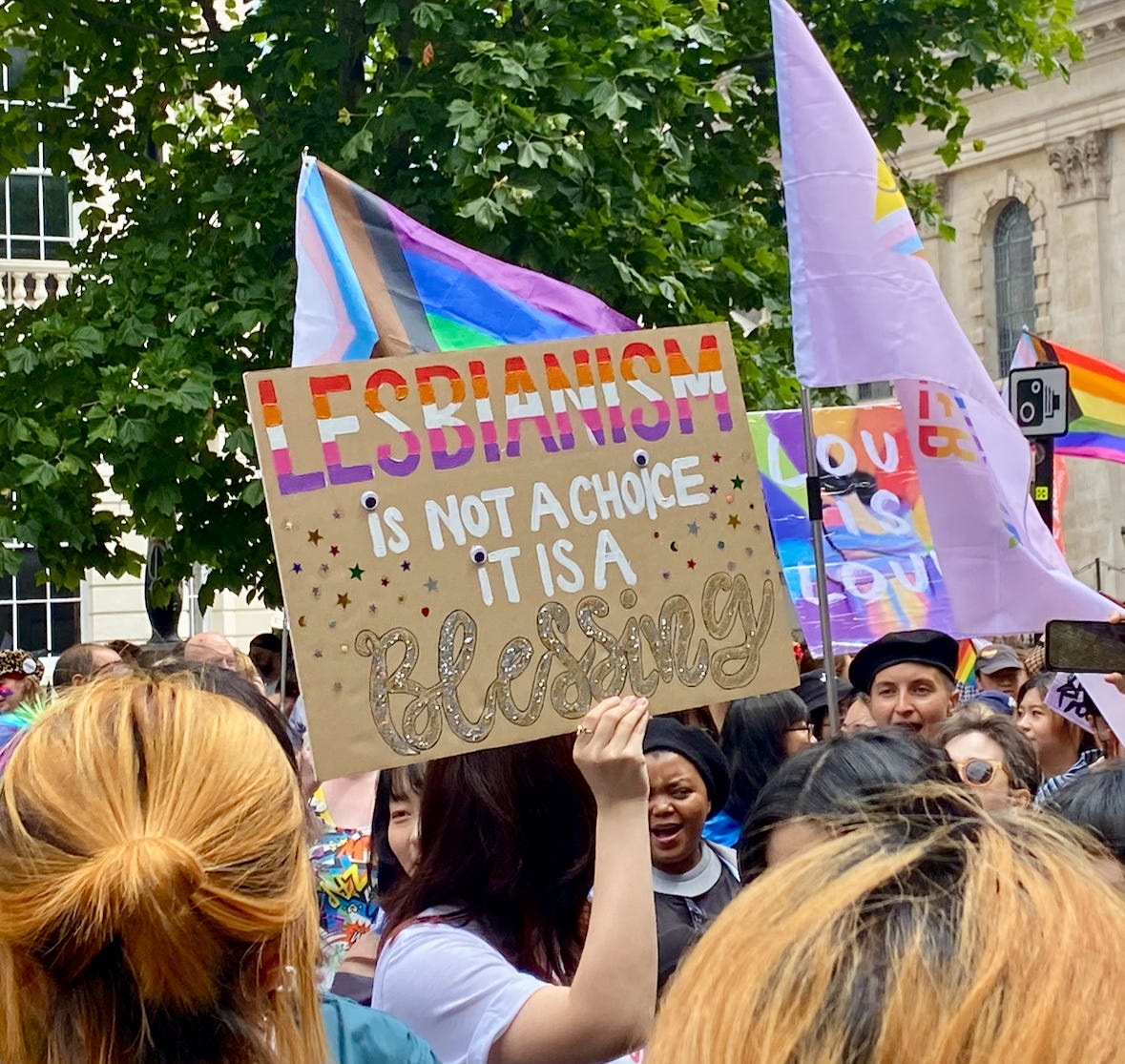
It all comes down to that undeniable feeling of belonging. Especially when you’re travelling across new countries, and nothing is consistent – finding that Irish pub, or a gay bar with “dyke <3” graffiti, is a sign of craved acceptance. While lesbianism isn’t something I can pass down, I do lead with the things it’s taught me. It’s something that’s mine and so many others’, and that’s why I love it so much. Without the community, the label would be nothing. But community is where I have my voice heard and my feelings validated and my hands held tightly.
This isn’t me trying to escape my British identity – I never can. I was raised on British TV, school choir songs, tea with milk and Cheryl Cole being the nation’s sweetheart. England shaped me too, and I have so many privileges as a result of where I’m from, which have led to all my core experiences. I don’t dismiss the validity of my British passport, or think I’m any different to others who possess it. However, I don’t feel excited asking other British tourists where they’re from – having the UK in common isn’t enough for me to feel connected to someone, whereas I watch Ireland embody connection completely.
My blue passport that forces me into non-EU control lines isn’t something that sparks joy, but I will wear an orange/pink combination merrily. My queerness isn’t something I can always show, but when the time is right, I present my lesbian passport with pride.
I know that anyone, or anywhere, that matters, will accept it with a smile. The British passport gets me through borders, but it’s this one that takes me home.
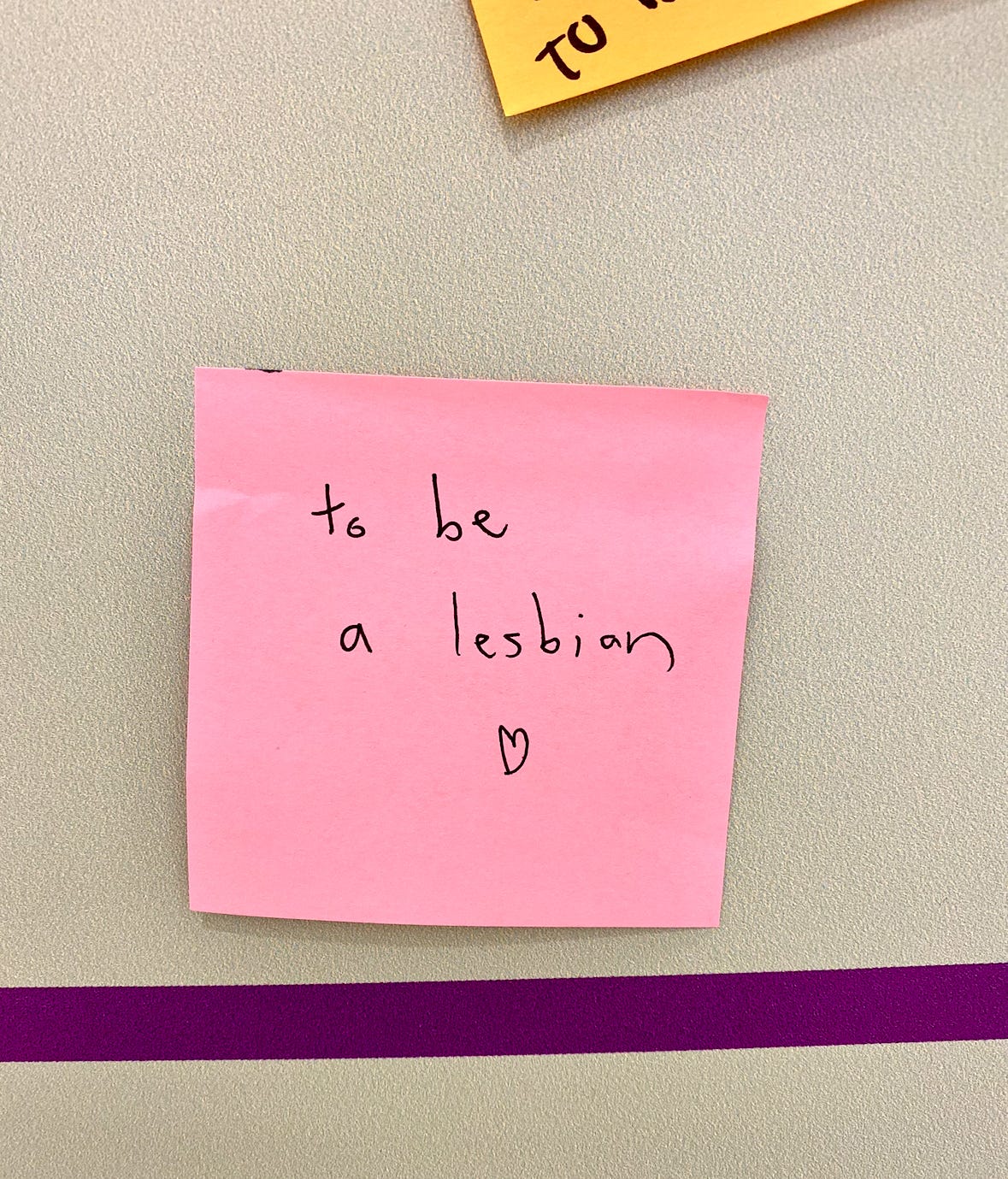
TLDR: being a lesbian is cooler than being British.
How did I miss this one?! Blessed to finally read it almost a year on, one of my new favourites from you <3 This post is absolutely bursting to the brim with joy and pride and it made me smile so much
yesss, this is so real. I’m embarrassed to admit I’m English but will jump at the first chance to tell people I’m a lesbian 💜